

Transparent Assumptions
Every scenario should make its inputs, scope, uncertainty, and analytical framing visible so outputs can be reviewed, discussed, and reproduced with confidence.
Research Platform Overview
WeliAI is a research workflow platform being developed to support model-based scenario analysis, transparent interpretation, and practical scientific and technical modeling workflows.
The platform is designed to help researchers and analytical teams structure questions clearly, generate reproducible outputs, and interpret results with explicit assumptions and visible limitations.
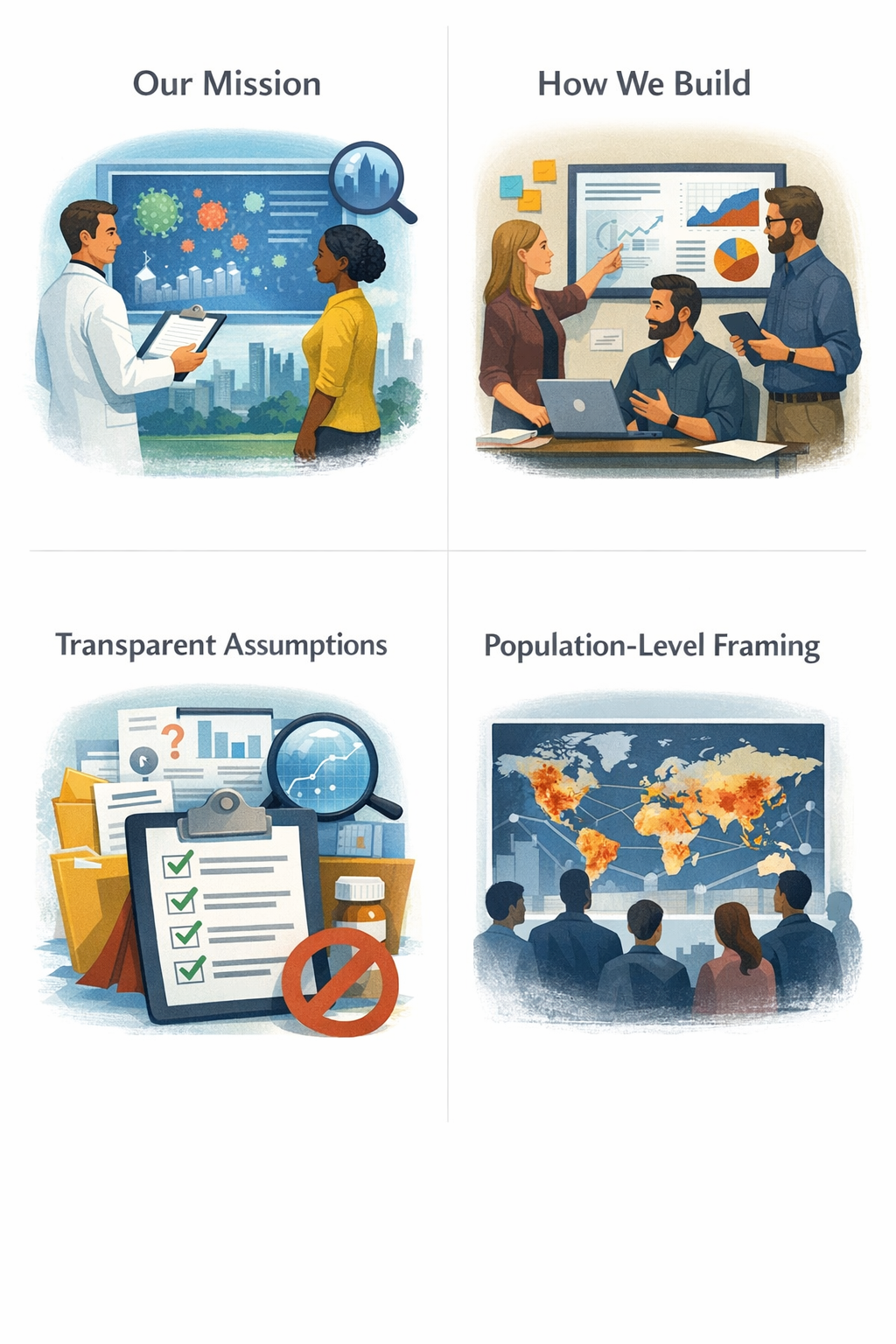
Our mission is to support rigorous research workflows for dynamic systems and quantitative modeling. We prioritize transparent assumptions, reproducible outputs, and plain-language interpretation to help research teams review complex scenarios with greater clarity.
WeliAI is developed through an iterative research-engineering process that connects structured problem intake, targeted clarification, model generation, and result interpretation. We focus on scientific credibility, practical usability, and careful scope control so that the platform remains useful for research support while clearly separated from clinical decision systems.
Every scenario should make its inputs, scope, uncertainty, and analytical framing visible so outputs can be reviewed, discussed, and reproduced with confidence.

WeliAI is designed for research-only scenario analysis and artifact-grounded interpretation. It is not intended for patient-specific recommendations or high-stakes decision workflows.

WeliAI is research support only. It is not intended for clinical, diagnostic, treatment, financial, legal, or operational decision use.
WeliAI is being shaped as a platform for teams that need careful scenario analysis, disciplined interpretation, and visible boundaries around how analytical outputs should and should not be used.